



Has a medical professional ever accused you of overreacting or being overly cautious? If you live with chronic illness, I bet they have. And if you are a woman, I can almost guarantee it. As Meghan O’Rourke says in her popular book “Invisible Kingdom,” in a chapter called “The Woman Problem”:
The stereotype of the sickly woman whose disease is strictly psychological still holds today, when examples in medical literature of “problem patients” are nearly always women. And so it is a truth universally acknowledged among the chronically ill that a young woman in possession of vague symptoms like fatigue and pain will be in search of a doctor who believes she is actually sick. More than 45 percent of autoimmune disease patients, a survey by the Autoimmune Association found, ‘have been labeled hypochondriacs in the earliest stages of their illness.’
It's me. Hi. I’m the “problem patient,” it’s me.
I don’t exactly enjoy being seen that way, but I know my reputation precedes me. I’m often coming to my doctors with concerns that are a bit unusual. But they are always very real.
I don’t exaggerate.
I’m not a hypochondriac.
I just want to ask questions and make them aware of my concerns.
Still, as O’Rourke says, finding the ones who take me seriously, even when they have no reason not to, can be a challenge.
One of the uncommon medical concerns I deal with is skin that is sensitive to adhesives. Even something as simple as a band-aid leaves me with an enduring red outline, long past the time the wound being covered has healed. Paper tape over gauze after a blood draw virtually guarantees that I will have red splotches in the crook of my arm for days. Even a fake tattoo or a fun sticker at a carnival leaves a lasting mark. So, imagine what I look like after a good, long hospital stay or a surgery.
As a cardiology patient, I discovered quickly that my skin hates nothing more than electrodes, the stickers applied to your chest and torso to check heart rate and rhythm. During a simple in-office EKG (electrocardiogram), the stickers are only on my skin for a minute or two before being ripped away, so they are unpleasant but not the main culprits of my discomfort. When I visit the hospital, on the other hand, a few different types of electrodes may be applied.
Some consist of a thick, round or square foam with one extremely sticky side containing a large dollop of gel in the center. These electrodes are supposed to be that sticky so they won’t keep sliding off your skin, resulting in inaccurate readings. And the gel is there to improve the conduction between your skin and the heart monitor you’ve been connected to. But for me, this type of electrode leaves the worst, most long-lasting marks.
Other electrodes are made using a cloth tape, with less gel and less stickiness, which also makes them less reliable and less durable. So, too, with a children’s version of the electrodes called “Huggables.” Both the cloth electrodes and the Huggables are interchangeably referred to as electrodes for “sensitive skin,” but they rarely seem to be readily available upon request, in my experience.
Within the first year of meeting my cardiologist who specializes in the genetic heart disease Hypertrophic Cardiomyopathy (HCM), he wanted me to wear a Holter monitor.
A Holter monitor is a wearable device that performs an electrocardiogram (EKG) while you go about your daily activities. It helps your cardiologist determine if certain activities cause your heart rate to beat irregularly.1
Wearing it over a longer period allows the doctor to gather much more data, and it is commonly recommended to help assess patient risk levels for arrhythmias in HCM.
There are several types of Holter monitors:
Traditional Holter monitors continuously monitor heart activity for 24-48 hours.
Extended-wear monitors can be used for a longer period, up to two weeks or more.
Event monitors use a smaller recording device that only records when symptoms occur.
Wireless Holter monitors record heart electrical activity for a set time, then send the data to the doctor's office…2
My first Holter monitor experience, for another cardiologist a year earlier, had been a traditional monitor, lasting 24 hours. While my skin was irritated afterwards, it was manageable. But on this occasion, I was scheduled to have an extended-wear Holter monitor affixed for 7 days. For convenience, the office scheduled me to pick it up right before an appointment with my HCM cardiologist.
I arrived at the hospital early and ventured to the 6th Floor Electrophysiology (EP) Department, where I was soon taken into the patient area by a nurse.
As I hopped up onto the gurney, I told her something like “By the way, most adhesives cause me to break out, and the gel on the inner part of the electrodes makes me rashy.”
I said it in kind of a casual, flippant way, to make it seem like I wasn’t a “problem patient,” but I was hoping she would intuit my real intention.
Instead, she seemed to think I was being rash.
“Don’t worry about it,” she said. “Most people tolerate these well.”
I understood that to mean my concern was insignificant to her, despite, potentially, having significant consequences for me.
“You don’t know my skin,” I thought, holding my tongue because I intended to follow doctor’s orders and wear the monitor, regardless of any discomfort.
She proceeded to apply several electrodes to my torso and neatly bundle the attached wires together into a small pouch, alongside a connected monitoring device, which would live in the back pocket of my pants for the duration of the test. Extra electrodes were provided in case one fell off and needed to be replaced. Then, I was on my way to my scheduled cardiology appointment.
I left the EP Department, walked into the main hallway, and approached the elevator bank. Someone else had already called for it, so when the elevator arrived, I stepped inside with a few other people, and I pushed the “8” button to go upstairs to the Hypertrophic Cardiomyopathy Center.
That’s when the itching started.
All around the sticky, gel-covered electrodes, the itching got progressively worse as the elevator doors opened on the 8th floor, and I walked down the long hallway to Cardiology.
When I checked in, I reported my discomfort to the person behind the desk, who was kind enough to have the nurse pop out into the waiting room to see me.
Nurse Noreen, who I got to know well over the years, took one look at the rash that had now spread across my chest and down my arms and said “No! Turn around! Go directly back down to the 6th Floor, and have them take it off! Do not come back upstairs until that’s done!” Her eyes were practically popping out of her head as she said it.
Following orders, I headed straight back to the elevator, and a mere 15 minutes after the monitor had been secured, it was being removed.
The rash remained for days, despite heavy applications of hydrocortisone cream to counteract it.
In retrospect, I get a good chuckle out of remembering the look on Nurse Noreen’s face when she saw the rash, but it definitely was not funny at the time. I felt unheard by the EP Nurse who had dismissed my concerns, and I was mad at myself for not being a good enough self-advocate.
Could I have done more to make the nurse believe me from the get-go? Maybe. But to give her the benefit of the doubt, given the lack of accessibility to the “sensitive skin” electrodes, I’m not sure she had other options.
As a result, I went so far as to bring my own electrodes when I had open-heart surgery, just to be sure I had what I needed to be comfortable.
On another occasion when I landed in the Emergency Room, I had a lengthy discussion with the nurse about “sensitive skin electrodes” (she had never heard of such a thing), and it took about an hour before she finally made the call to the Central Supply Department to make an inquiry on my behalf.
About two years ago, I had to wear another Holter monitor, and this time, the Electrophysiologist wanted me to wear it for several weeks instead of a handful of days. There was an unusual fluttering sensation in my heart that wasn’t showing up on the reports from my ICD (Implantable Cardioverter Defibrillator, which is both a pacemaker and a defibrillator), and a monitor was the best way to figure it out. I was, understandably, concerned.
When I asked the Electrophysiologist if there was any possibility of using an adhesive for sensitive skin, I was pleasantly surprised to hear her reply “Yes! We have those in stock, let me go grab one.”
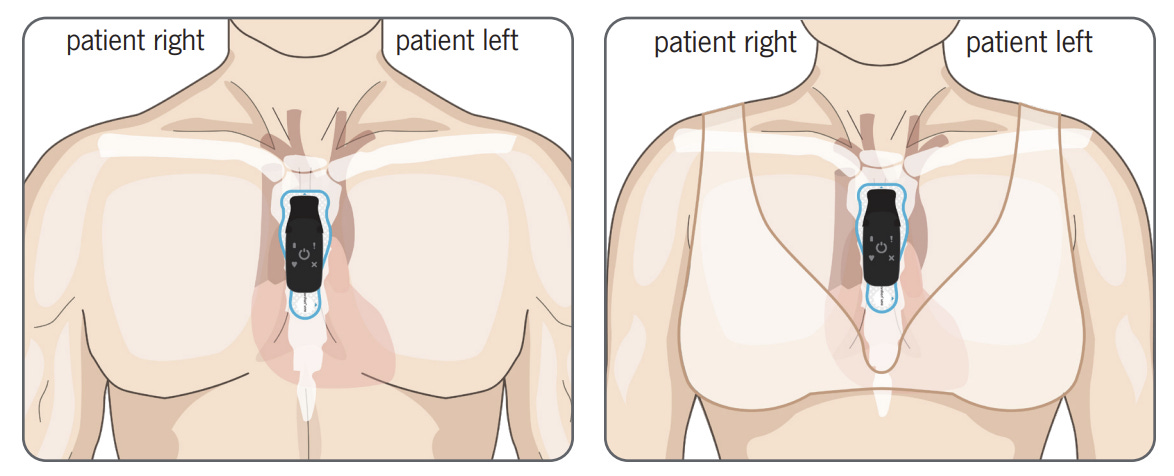
Upon her return, I was presented with a wireless monitor. Instead of a bunch of electrodes connected by wires to a box that needed to be carried around, this new version was a single, small, black box with one large sticker around it, and the adhesive was specifically made for those of us with skin sensitivities. Enough time had passed that newer and better options had been developed and made more readily available.
Was the new device perfect? No. I still had some skin irritation from wearing the device for a full month, with weekly adhesive changes. But it wasn’t nearly as bad as my earlier go-rounds, and that allowed me to complete the necessary testing.
In fact, when the results of my wireless Holter monitor came back, we caught the problem we were looking for on week 3 out of the 4 weeks I wore it. If a new adhesive hadn’t been developed and used on this monitor, I wouldn’t have been able to endure the testing long enough, and the problem (which turned out to be a programming issue with my ICD) would not have been discovered and resolved in such a timely fashion.
I am constantly perfecting the art of self-advocacy, and this sticky issue is just one example where I always need to remember to use my voice. To remind myself that I am not being rash and I am not a “problem patient.” I am simply a patient, and we all have our particular needs.
Each issue of "What's Her Problem?" includes questions for further discussion. You can Leave a Comment publicly below, or become a Paid Subscriber to join the conversation in the private community Chat.
This week’s questions:
Do you ever feel like a “problem patient?” How do you advocate for yourself when you have an uncommon medical need? Have you had a doctor or nurse respond rashly?

https://www.upmc.com/services/heart-vascular/services/procedures/holter-monitor
https://www.upmc.com/services/heart-vascular/services/procedures/holter-monitor
Debra, my late Mom had the same kind of issues with adhesives and latex and was always having to speak up about it. As you learned, you can't be shy about your needs. As we say in coaching, you're the expert on you!
Unfortunately, there are too many people who are in patient-facing roles that forget that they are there to provide patient care and that means empathy and listening.
I hate the stickers!! They leave rashes on me, too. In 2023 I wore a holter for 72 hours and I had the supposed sensitive skin stickers. They weren’t great and I had to stick them in new places every day. (As instructed when I said they were bugging me). I was left with a chest and side full of inflamed areas. Not as bad as weeping rashes that the other stickers cause, but not lovely.
Preop last year, I said I was allergic to chlorhexidine. It got put everywhere all over my charts and tags. Well, somebody wiped me with it and the surgeon caught them and FREAKED OUT. They washed it off immediately, but he told me when I woke up and said to say IMMEDIATELY if I had ANY reaction at all. I did not. They got it off me in time.
My former physician wanted to explore MCAS after I had recovered from surgery, but she left the practice and now I don’t know what to do.
Nobody else takes anything I say seriously “well we’re all aging, aren’t we”. I’ve had them miss anorexia (because I’m fat), dangerous electrolyte imbalance, hyperparathyroid (what the surgery was for, and again the surgeon “HOW long have you been noticing this?????”
“Four years, at least. I’d ask about it, but nobody ever followed it up”), malnutrition. Again, I’m fat.
My heart was doing weird things because of electrolyte issues. And maybe calcium issues too. That was even dismissed. There were “abnormal rhythms” and SVTs but gee maybe I’m dehydrated. Or anxious. Or old. Or fat.