

What's Her Problem?
Issue #1: People make assumptions about what chronic illness and disability “should” look like.

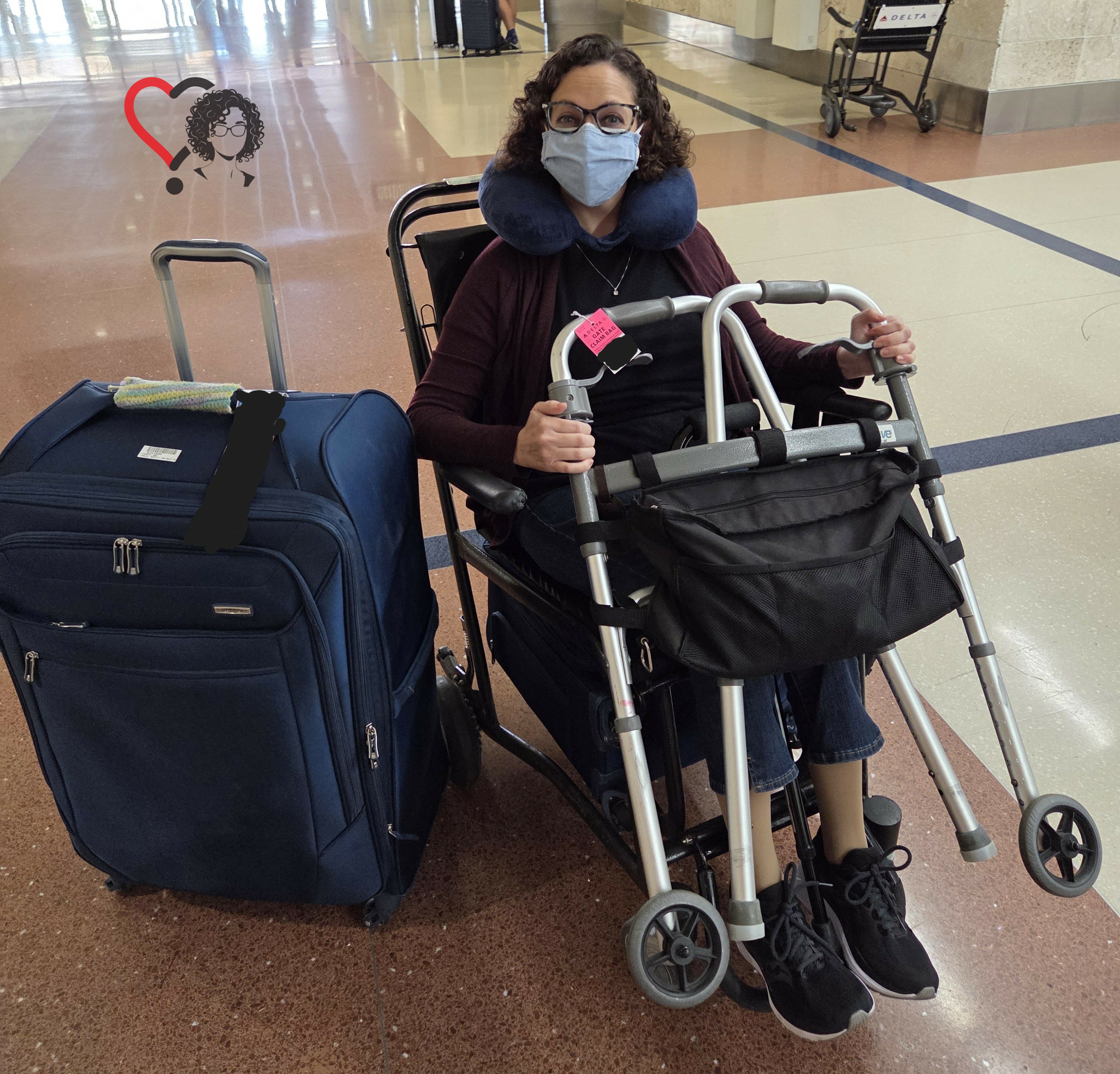
A TSA agent at LaGuardia Airport in New York glanced at me before turning to her colleague and asking “What’s HER problem?!”
I was sitting in a wheelchair, attempting to juggle both my cane and my walker on my lap.
I looked around, uncertain she was talking about me. Dozens of fellow travelers nearby were emptying the contents of their pockets into plastic trays, placing their carry-on luggage onto conveyor belts, and removing their shoes before stepping through metal detectors. But sure enough, she was looking directly at me.
My face flushed with embarrassment.
A Delta Airlines employee was assigned to push me in the wheelchair, and we had just finished speeding through the terminal towards the security checkpoint. Upon our arrival in the TSA Pre-Check line, I had announced to the nearest agent, “I have an implanted medical device and can’t go through the metal detector. I’d like to request a hand search, please.”
This TSA agent was summoned by her colleague to do exactly that; she oversaw pat-downs and cleared passengers with special circumstances. So, when she inquired “What’s HER problem?” loudly enough for everyone in the Pre-Check line to hear, there was only one logical conclusion.
She was questioning the validity of my disability, based solely on my appearance.
In response to her query, I had a choice to make. Option 1: Call the TSA agent out on her discriminatory attitude and make a scene. In which case, she would probably hold me up at security and make me late for my flight. Option 2: Respond with kindness and a smile.
I almost chose the former, allowing the words “What’s MY problem!? I’ll tell you what my problem is…” to escape, under my breath…just quietly enough for her to miss.
More loudly, I offered, with a smile, “Do you want to see my device ID card?”
“Oh. That’s why you need the hand search?” she asked, softening a bit.
“Yes,” I replied. “I can’t go through the metal detector. The magnet can interfere with the function of my ICD. Plus, once you send my walker and cane through the scanner, I won’t be able to walk through on my own anyway.”
The complexity of my situation seemed to be sinking in.
She grabbed the handles of my airport wheelchair and moved me through to the pat-down zone, where she worked silently, checking my arms, legs, torso, and shoes, as well as the wheelchair itself. Once I was deemed safe, the TSA agent released me back into the custody of my Delta escort, who gathered up my carry-on bag, walker, and cane so I could return to my previous balancing act.
“Have a great day,” said the TSA agent.
“You too,” I replied, smile intact.
I made it to the gate in plenty of time for my flight.
But after our encounter, I couldn’t get the words “What’s HER problem?!” out of my head. Why was I so upset?
In part, I was upset about the real answer to her question. Such a loaded question when you are a person managing multiple chronic illnesses and disability.
If I were to take it seriously and provide an answer, I would have to tell her I have a genetic heart condition called Hypertrophic Cardiomyopathy (HCM) that made the wall of my heart so thick I required open-heart surgery in 2016 to relieve the obstruction of bloodflow.
That the ID card I offered to show her was for my Implantable Cardioverter Defibrillator (ICD), both pacemaker and defibrillator, which was implanted 6 days post-open-heart surgery because I have almost no underlying heartbeat otherwise.
She would need to hear that an autoimmune sensory neuropathy killed off 73% of the nerves in my feet in 2019 and I had spent the last five years re-learning how to walk, as I very slowly transitioned from wheelchair to walker. And that my biggest accomplishment is being able to use a cane on safe, indoor surfaces.
She wasn’t in the loop on my other “problems,” including Hashimoto’s Thyroiditis, Chronic Inflammatory Response Syndrome (CIRS), chronic dry eye, medication-induced osteoporosis, and a long-term Lyme Disease diagnosis.
And I shouldn’t have had to disclose any of that or prove anything to her to get the assistance I needed just to travel freely. The Americans with Disabilities Act guarantees me that right.
When I dug even deeper, I realized that my reaction to “What’s HER problem?!” was so strong because she very clearly saw me as a problem, rather than as someone who is constantly doing her best to manage a litany of health problems.
I knew I wasn’t a “problem.” The TSA agent’s level of discomfort with my medical situation was. Rather than approach me with curiosity, she defaulted to assumptions and accusation. It’s not a great approach, but it’s also not uncommon. In a world that rushes to judgment, I simply wish she had asked me directly about my situation.
When the “problems” are invisible, it’s easy for others to act like they don’t exist or to question whether they exist at all, but when the problems are visible, they are forced to confront them. But for those of us experiencing illness or disability, we don’t get to choose. Both the visible and the invisible are an unavoidable part of our day-to-day.
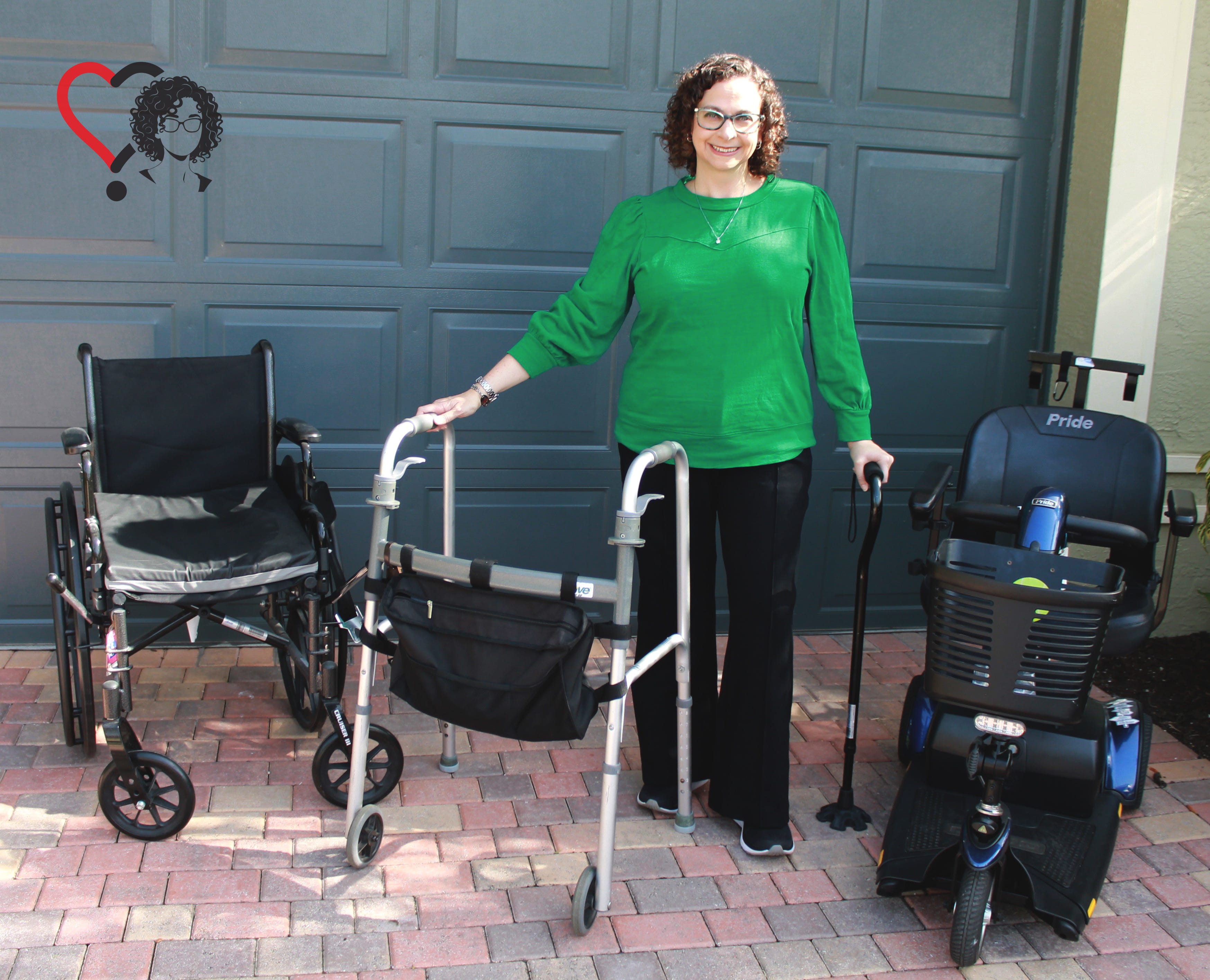
People tell me “You’re too young for this,” based on how I look, all the time. And feel free to fill in the blank for what “this” is. Heart disease. Neuropathy. Walking with a walker. Driving a minivan with a lift in the back for my mobility scooter. The list goes on. Despite falling into the category of “middle-aged woman,” my baby face makes people think I am much younger than I am. I know it’s a good problem to have. In our current era where women are desperate to look younger (and expected to), it is only recently that I’ve begun to develop any forehead wrinkles or crow’s feet that belie my true age.
In the realm of invisible illness and disability, however, appearing youthful is a double-edged sword. The TSA agent was assuming, as so many have before her, that I was “too young” to need any sort of special assistance, despite all evidence to the contrary.
But no one is ever too young for a medical issue. Chronic illness and/or disability can happen to anyone at any age. Let’s examine the facts:
According to the Hypertrophic Cardiomyopathy Association (HCMA), “HCM patients can be diagnosed at any age, from birth to age 80+, there are even cases of those in their 90's with new diagnoses.” Further emphasizing my point, “The average age of diagnosis within the HCMA database is 39 years.”1 I was 32 when I was diagnosed.
According to the American Heart Association, more than half of U.S. adults don’t know heart disease is the leading cause of death, despite its 100-year reign with that distinction.2
“Invisible illnesses affect an estimated 10% of the 61 million Americans who deal with a physical or mental ailment that limits their movements or senses, according to the CDC.
And while a quarter of American adults have a condition that can be considered a disability, only a fraction use visible supports such as a cane or wheelchair, meaning most don't appear disabled, according to a 2021 paper in the AMA Journal of Ethics.” 3
“Invisible illness encompasses a laundry list of conditions ranging from the common to the obscure. It's easy to imagine that people with heart failure, cancer, diabetes, depression, or dementia might fly under the radar despite dealing with frequent exhaustion, chronic pain, nerve damage, or trouble thinking or remembering.”4
According to the NIH, 1 in 300 people are born with a genetic health condition.
Per the CDC, 60% (well over half!) of the U.S. population has a chronic illness such as heart disease, diabetes, cancer, or autoimmune illness.5
And 40% of the U.S. population has multiple chronic conditions, like me.6
Why are all these statistics so important? For me, they indicate that if you are not dealing with a chronic condition personally, then someone in your family or social circle almost certainly is. At some point, we will all be patients, friends, or caregivers to someone managing illness and/or disability. Yet, we still act like managing illness is the exception to the norm and that disability is something extraordinary to be accommodated, rather than a very normal part of life. If we are lucky to live long enough, most of us will experience disability at some point.
Despite that, we aren’t brought up learning how to handle these increasingly common situations and talking freely about them. We are rarely given the tools in school or by our families to navigate through the physical, financial, social, and emotional ramifications of illness or disability.
No one ever teaches us how to be sick, especially chronically so.
When twenty-something me started the process of managing illness, I would have handled this situation differently, either shutting down or letting myself take the bait to argue with the TSA agent. Middle-aged me has been at this long enough to know better. But I only learned that through experience.
That is a big part of why I am starting this Substack newsletter. I want to take what I have learned through my own successes and failures and help make the path forward a little bit easier for others who are going through something similar. If we identify the “problems,” challenges, issues—whatever you choose to call them—that people with chronic illness and disability are facing, and we talk about them, hopefully we can create change. Or, at the very least, we can feel less alone.
I believe in the power of storytelling. I suppose that’s not surprising, coming from someone who spent 16 years working in the business of live theatre. This newsletter format is slightly different from theatre, but the goals are the same: to create connections; to build awareness; and to make people think or feel something.
In each edition of “What’s Her Problem?” I will be tackling one “problem,” an Issue at the Heart of Chronic Illness and Disability, by sharing a story from my own health journey through personal essays, interviews, opinion pieces, and more. I hope this weekly journey we are about to embark on is a great one. Welcome, and thank you so much for being here!
And remember, none of us are a “problem” to be dealt with, even if we are chronically ill or disabled. We are people worthy of a great life.
In each issue, I will be including questions for further discussion. You can comment publicly below, or become a Paid Subscriber to join the conversation in the private community Chat.
Today’s question: How do you handle situations where the validity of your illness or disability is questioned?

Invisible illness: More than meets the eye. Many people live with health conditions that can't be seen, but there are ways to ease the burden. May 1, 2023. By Maureen Salamon, Executive Editor, Harvard Women's Health Watch
Invisible illness: More than meets the eye. Many people live with health conditions that can't be seen, but there are ways to ease the burden. May 1, 2023. By Maureen Salamon, Executive Editor, Harvard Women's Health Watch
Buttorff C, Ruder T, Bauman M. Multiple Chronic Conditions in the United States. Rand Corp.; 2017. AND https://www.cdc.gov/chronic-disease/about/index.html
Debra, I'm so glad you reshared this post from before we connected.
Love the story and that TSA agent and LaGuardia sound spot on. At least the silver lining was that it inspired you to start yoru Substack and we're all the better for it.
I hate security checks at airports. With me it’s simpler since I just wear a knee brace however on a bad day it’s easy to get an officer that is annoyingly caught up in the robotic nature of getting people to mover through the line quickly and smoothly. That officer who doesn’t want to stop to consider that a perfectly normal looking traveler might slow down the process because of an issue that isn’t visible. I was once told by an officer who wanted me to strip so she could see the brace that why do I wear clothes that don’t allow for a quick check? I was infuriated. Who was she to comment on what I should wear!